
Our Top Tips & Tricks For Growing Succulents
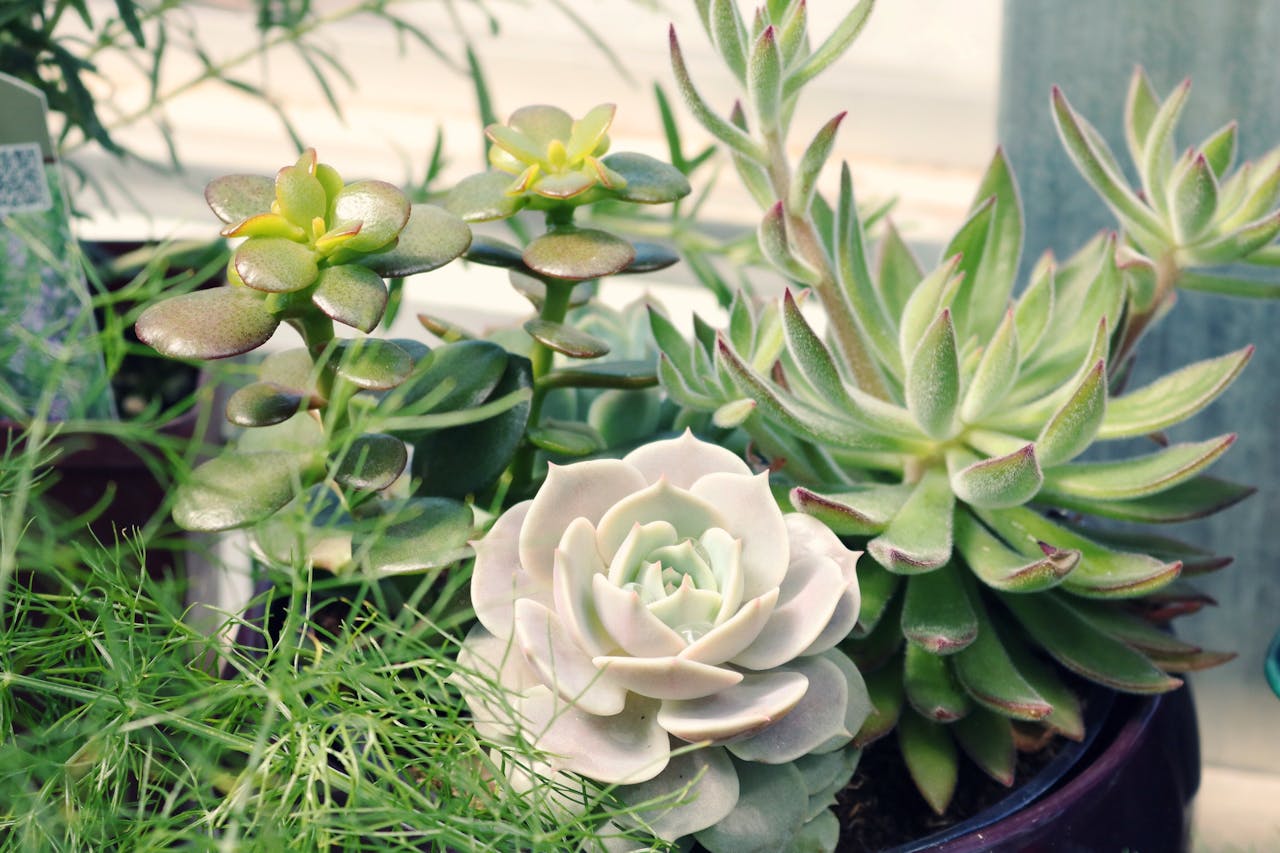
Feel like you’ve not got a green thumb, but love plants? These tips and tricks for growing succulents will help greenify your life!
By Lora O’Brien
Decorating your home with succulents will bring life into your home. These gorgeous plants are pretty easy to care for, and are perfect if you’re new to keeping plants. Plus they come in many shapes, sizes and colours, too!
The benefits of adding plants to your home are plentiful. Not only do they brighten up a space, but they can:
Improve humidity: Plants naturally release water. The increased moisture in a room can help with various health ailments such as sore throats, a dry cough, dry itchy skin and common cold symptoms.
Purify air: When plants release water vapour, this generates a pumping action which then works to filter contaminated air, pulling it down into the roots of the plant. Succulents are great at cleansing the air of toxins.
Boost oxygen: Some plants release carbon dioxide at night, but succulents don’t. Instead, they continue to produce oxygen. Every time thus oxygen is released, it adds fresh air to your home. This helps improve your ability to breathe! Succulents thrive in environments where we need fresher air, such as the kitchen or bathroom.
And succulents are a popular choice for many due to the fact they can thrive in most climates. Plus, when in season, they bloom, adding a splash of colour to your home.
Not sure how to best care for them? Read on for 15 tips!
15 Tips & Tricks For Succulent Plants
1. Use the right soil
One of the first ways people can harm succulents is by growing them in the wrong type of soil. Many succulent breeds are native to desert conditions, so they will need soil to mimic this.
To make them thrive, one of our top tips & tricks for growing succulents is to use the right soil. The perfect soil is mostly sandy, rocky and with low organic matter. You can make this yourself for cheap, or buy a pre-made soil mix if you’d prefer.
Image credit: Pinterest

2. Get the temperature right
The general rule of thumb for succulents is that they thrive best in temperatures that range from 40-80°F. However, there are some succulents which can live outdoors all year round, and can even thrive well in snowy climates.
If they’re outside, during the hottest days in summer, be sure to protect your succulents with plenty of shade to prevent them from getting sunburned. If you have large succulents, you may want to plant directly into the earth, since soil stays relatively cool even during changing seasons.
Be mindful of what you plant them in. Concrete, ceramic and wood planters are great because they insulate plants, protecting them against drastic temperature changes.
In the winter, protect succulents from frost damage by helping them to stay above freezing point in temperature. You should bring them indoors, or cover them with cloth if they stay outside.
Image credit: Pinterest

3. Make them pretty
Don’t just shove your succulent on a shelf someplace! Use them to make your home stylish while reaping the benefits these fabulous plants offer.
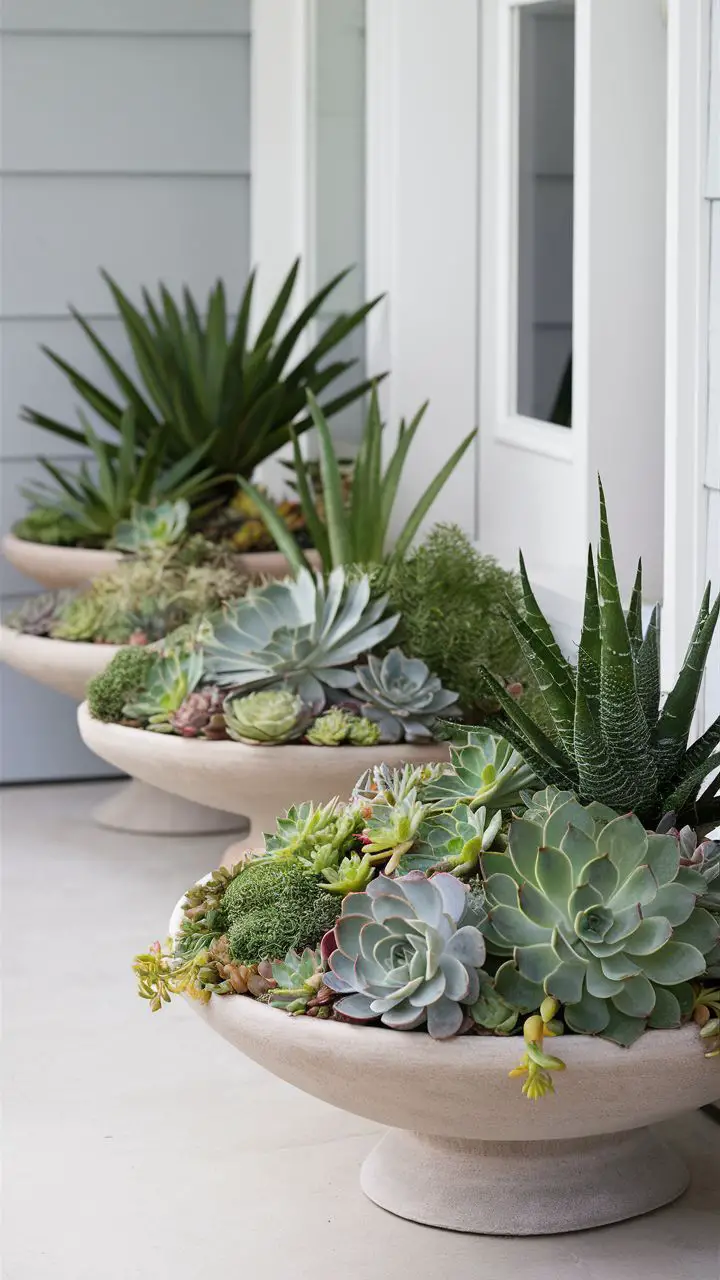
My suggestion? Store them in a gorgeous pot and display them as a centrepiece on your kitchen or coffee table. The greenery will brighten any room, and you’ll love looking at these while you eat!

4. Mix & match
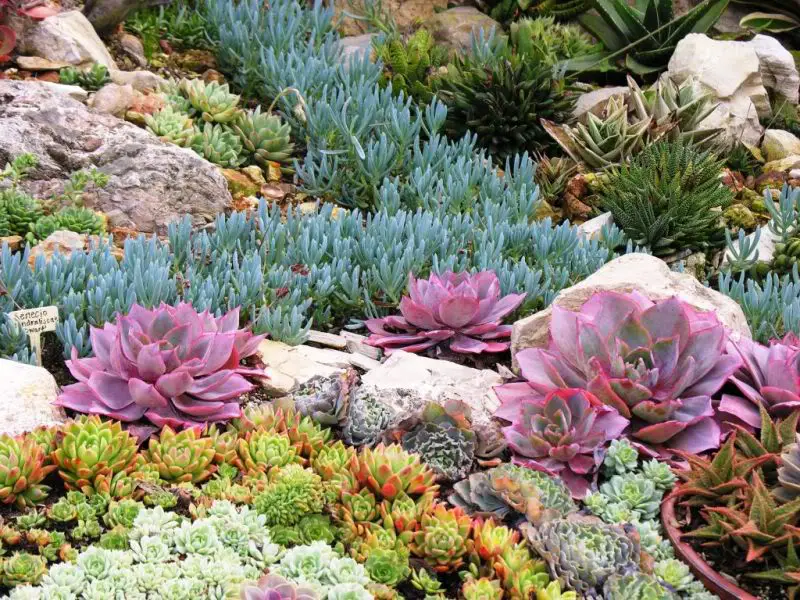
Succulents come in all kinds of colours, textures and shapes. From pointy aloe vera and spiky agave to soft, rounded hens and chicks, from bruised black princes to bright red ‘sticks on fire’ you’ll find a wide variety of succulent types to choose from. Which is great! Because succulents are at their most gorgeous when they are mixed and matched with contrasting plants.
One of my best tips & tricks for growing succulents? Mix up textures, sizes and colours for the best effects. That’s as true for pots as it is for plants in the ground!
Image credit: Pinterest

5. Don’t be afraid to prune
When you’re trying to help your plants to grow, it can seem daunting to trim them. Many of us are scared we’ll kill our plants by pruning them, since you are technically removing part of the plant. However, with succulents, the opposite is true.
One of my top tips & tricks for growing succulents is to cut them back if they get leggy. Regular trimming of your succulents will help them to grow more. And doing so helps them to stay healthy, grow new buds and helps manage the size of the plant.
Not sure how to do it? Check out this video!
Image credit: Pinterest

6. Make more!
The wonderful thing about trimming your succulent plant is that you can use it to propagate and to spread the love! This is a great, short tutorial that offers several easy ways to make more baby succulents. It’s perfect for adding new plants to areas that look sparse.
Image credit here.
7. Feed your babies
During the summer months, succulents can be hungry and in need of a little more TLC. This is when you may want to use a fertiliser to give them a light feeding.
As with watering, a little goes a long way. Be careful not to over-fertilise, as this can cause them to grow too quickly and become weak.
One of the best tips & tricks for growing succulents is the “half rule”. That just means read the fertiliser instructions, and then use half the recommended dose when feeding.

8. Don’t forget to water
Succulents are known to be hardy and drought resistant. But as with any plant, they still need careful watering.
During the summer months, they will need water around once per week, whereas once every few weeks will suffice during the winter months. When watering succulents, you’ll want to thoroughly soak the roots.
Between waterings, make sure the soil is almost, but not entirely dry before watering again.
Image credit: Pinterest

9. Try making a tapestry
Create a succulent tapestry for your house – indoors or out. All you need to do is get a frame, some soil and succulents of different shapes and colours. Try planting them closely together in the design of your choice. Interweave them and produce a living work of art!
Note: Most brightly coloured succulents will lose their brilliance (and likely just turn green) if not put into direct sun.
Image: Pinterest

10. Watch out for pests & problems
Succulents are strong! But they’re not bulletproof. So another of my top tips & tricks for growing succulents is to monitor them regularly for pests and problems.
Under-watering them occasionally won’t do much harm, as these plants do store a lot of water in their leaves. But over-watering can lead to root rot, and/or bacterial or fungal disease.
Another thing you’ll want to watch out for is pests! Scale, mealy bugs and root mealy bugs are some of the more common pests, but spider mites and fungus gnats can also wreak havoc.
Due to the bugs being small, they can be hard to see. Keep an eye out for stickiness or black mould, but also weak or shrivelled leaves.
Image credit: Pinterest
11. Rearrange them
The majority of succulents love direct sunlight, but they can get too much of a good thing! If one side of the plant is getting more light than the other, it’s best to rotate the plant so that it gets an even amount of sunlight.
Tip: If a succulent is leaning notably towards the sun, it’s time to move it. By rotating and rearranging them often, you’ll prevent this from occurring.

12. Provide housekeeping
No matter where you plant your succulents, ensure they stay pretty and healthy by cleaning them up! Pluck off wilted, yellowed or browned leaves. And if your plant is indoors, clean off surface dust. This blocks the succulent from getting maximum sunlight. Just very carefully wipe the leaves off with a damp cloth.

13. Suspend your succulents
If you’re limited to space, why not hang your succulents? The gorgeous hues will help to accentuate any room, especially if they’re in a lovely pot and hanger. Suspending them may help prevent them from being overwatered, too!
Tip: Hang them where you won’t walk into them and bump your head!

Do you have any tips & tricks for growing succulents you’d like to share? Let us know in the comments, below!

- Meet The Winners Of The Eluxe Awards 2025 - March 31, 2025
- Our Top Tips & Tricks For Growing Succulents - February 27, 2025
- Eco Friendly Features To Check When Buying A New House - January 22, 2025


